Why Your Hands Slip on the Megaformer - and What Actually Helps
Quick Answer: Hands slip because of moisture, not weakness - sweat plus the smooth handle surface reduces friction fast, and most people compensate by squeezing harder, which fatigues the forearms and makes it worse. Dry your hands before every set, use a lighter grip with the whole hand rather than a crushing grip with the fingers, and consider grip socks or a small towel on the carriage. Grip aids are a last resort, not a first one.
Most of this is technique, and the studio being warm is doing more damage than you think.

Why does grip fail so fast in Lagree specifically?
Because of what the method does with time under tension, combined with a room that is designed to make you sweat.
Lagree exercises run long. A single move is often held or repeated slowly for 60 seconds or more, and the whole class is built around sustained tension rather than repetitions. Grip is a sustained isometric contraction, and sustained isometric contractions of the forearm are among the fastest things in the body to fatigue - the muscles are small, they work continuously, and continuous contraction restricts their own blood flow.
On top of that:
- The handles are smooth and often metal. Good for hygiene, poor for friction once wet.
- Studios run warm and humid. Many are deliberately heated, and the class is intense enough that hands are damp within five minutes.
- Your body weight is partly on the handles. In planks and pulls, the hands are load-bearing rather than just guiding.
- The carriage is moving. Grip has to manage a changing force direction, not a static one.
And there is a feedback loop. When a hand starts to slip, the instinctive response is to squeeze harder. Harder squeezing accelerates forearm fatigue, which reduces the ability to hold at all, which increases slipping. People arrive at a state where their grip is genuinely gone by minute twenty, and they conclude they need grip strength when what they needed was to stop crushing the handle.
What actually helps, in order of what to try first
Free fixes first. They solve most of it.
1. Dry your hands before every single set. Not at the start of class - before each move. Keep a small towel on the machine and use it in the two seconds between exercises. This is the highest-impact change available and it costs nothing.
2. Change how you grip. Wrap the whole hand around the handle and use a moderate, even pressure rather than a maximal squeeze with the fingers. Aim for roughly 60 to 70 percent of your maximum grip. Full-effort gripping burns out in under a minute; moderate gripping lasts the whole class. Most people find this counterintuitive and then find it works immediately.
3. Fix your body position. A great deal of grip strain in Lagree comes from hanging on the handles instead of using the core and shoulders. If your shoulders are up around your ears and your weight is dumping into your hands, the problem is upstream. Pull the shoulder blades down and back, engage the lats, and distribute the load - the handles should be guiding, not carrying you.
4. Try the towel trick. A small hand towel folded over the handle gives a dramatically better surface than bare metal. Many studios allow it; ask first.
5. Grip socks on your hands. It sounds odd and it is common in Lagree studios - the silicone grip pattern on the sole provides friction where you need it. Some studios sell gloves designed for this.
6. Chalk or liquid chalk, if the studio permits it. Many do not, because of the mess.
7. Actual grip training, two or three times a week outside class - dead hangs, farmer carries, and towel pull-ups build the endurance that makes class easier. This helps genuinely and slowly, over six to eight weeks, which is why it is last on the list rather than first.
How do you tell weakness from slipperiness?
The distinction changes the fix entirely, and there is a simple test.
Dry your hands completely and immediately retry the move. If you can suddenly hold it, the problem was friction. If it still fails within seconds, the problem is forearm endurance.
Other signals:
- Slipperiness: the hand slides along the handle, you feel the surface moving under your palm, and it happens sooner in a warm class than a cool one
- Weakness: a deep burning ache in the forearm, the hand opens involuntarily, and it happens at a consistent point in the class regardless of temperature
Most people have both, in a roughly 70-30 split favouring moisture. That ratio is why fixing moisture and grip pressure resolves so much of the problem so quickly.
A useful check on the upstream cause: if your forearms are among the sorest things the day after a Lagree class, you are hanging rather than holding. Lagree is not a forearm workout, and sore forearms mean the load is going somewhere it should not. Look at shoulder position and core engagement before you look at grip aids.
Worth mentioning: if you get numbness or tingling in the fingers during class, that is not a grip issue and it is worth raising with a clinician rather than working around. This is general information, not medical advice.
Myth vs Fact: Lagree Grip Problems
Myth: Slipping means you need stronger hands. Fact: Usually it means you need drier hands and lighter pressure. Grip strength helps, but it is the slowest and least effective of the available fixes if moisture is the actual cause.
Myth: Squeezing harder gives you more security. Fact: Squeezing harder accelerates fatigue, and a fatigued hand has less holding capacity than a moderately engaged one. A 60 to 70 percent grip lasts several times longer than a maximal one.
Myth: Gloves solve everything. Fact: Gloves reduce direct feedback and some people find they slide inside them, which is worse. Try free fixes first and treat any equipment as a supplement, not a substitute for position and pressure.
Myth: Your grip will improve just by taking more classes. Fact: It improves somewhat, but Lagree is not efficient grip training - the loading is inconsistent and interrupted. Dedicated dead hangs and carries twice a week do more in six weeks than months of extra classes.
Myth: Sweaty hands mean you are working hard, so it is a good sign. Fact: It is a normal sign, and it is also a solvable problem. Being proud of it will not keep you on the handles in minute twenty.
Myth: Everyone else has it figured out. Fact: Grip is one of the most commonly reported issues among regular Lagree clients and instructors hear about it constantly. Asking your instructor is genuinely useful - they have seen every version of it.
FAQ: Lagree Grip Questions, Answered
Will grip strength training make a real difference?
Yes, over six to eight weeks. Dead hangs from a bar, three sets to near failure, twice a week, plus farmer carries. Expect gradual improvement rather than a fix, and use the technique adjustments in the meantime.
Are grip socks on hands actually acceptable in a studio?
In many Lagree studios it is common practice, and some sell them for exactly this. Ask your studio - policies vary, particularly around hygiene.
Why are my forearms so sore after class?
Almost always because you are hanging on the handles rather than supporting yourself with the core and shoulders. Fix shoulder position first - blades down, lats engaged - and forearm soreness typically drops within two or three classes.
Does it get better with experience?
Yes, for two reasons: your position improves so you load the hands less, and your forearm endurance improves. Most people report the problem largely resolving within two to three months of regular attendance.
Should I mention it to my instructor?
Definitely. They can watch your setup and often spot the position problem in ten seconds. It is one of the most common issues they deal with and there is nothing awkward about asking.
TL;DR:
- Grip fails from moisture far more often than from weakness, and warm studios make it worse fast.
- Dry your hands before every set, not just at the start of class.
- Grip at 60 to 70 percent, not maximally. Crushing the handle burns out the forearm in under a minute.
- If your forearms are sore the next day, you are hanging on the handles instead of using core and shoulders.
- Grip socks, a small towel, or dedicated grip training all help - after you have tried the free fixes.
Dry hands and a lighter grip fix most of this before you spend a dollar on anything.
See It in Motion
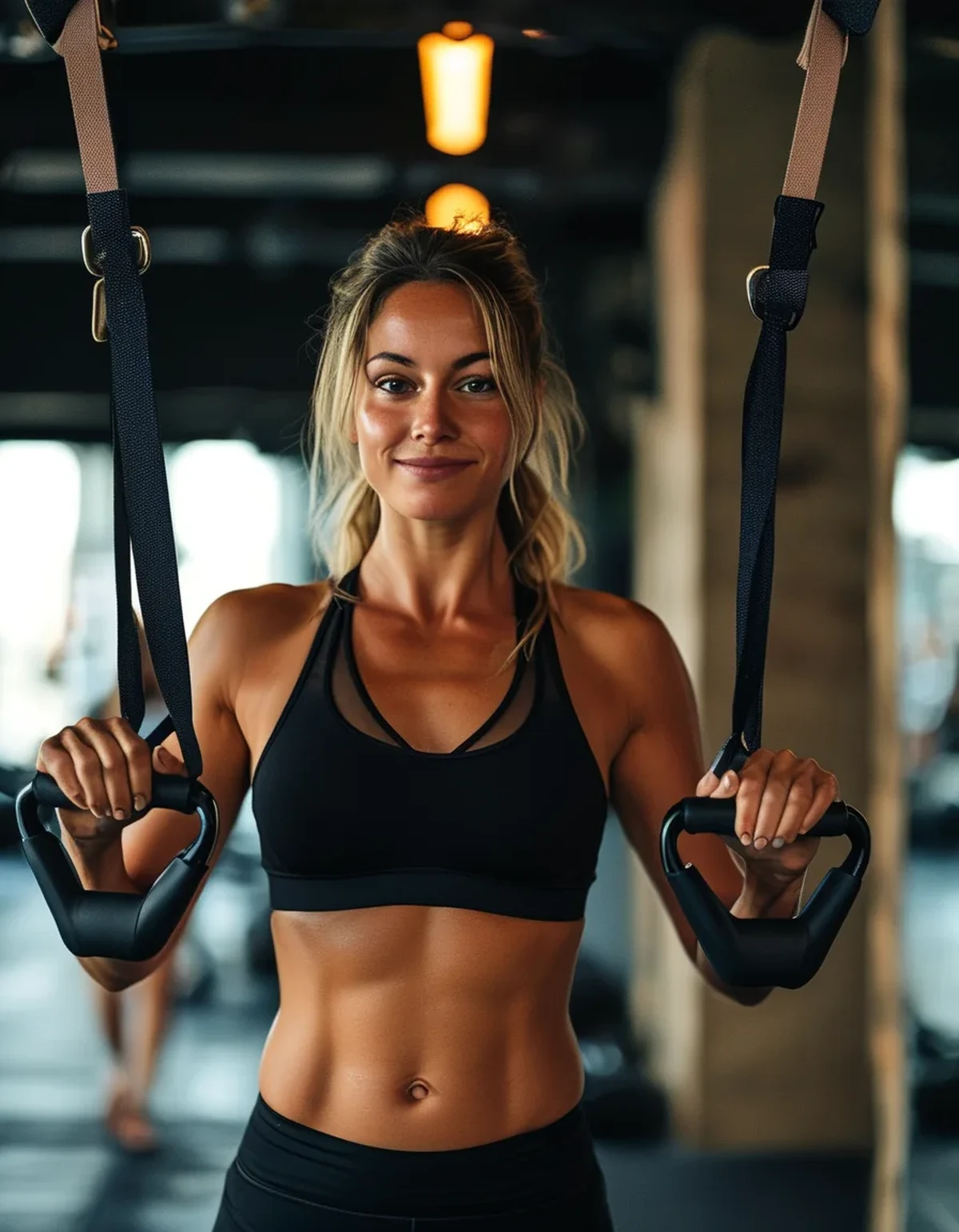
Seen here: High Waist Yoga Leggings with Side Pockets — shop it on bubblelime.com
Keep Reading
This article is for general informational and styling purposes only. Fit, sizing, and product availability may vary.