Why the Tempo Is the Hardest Part of Lagree, and Not the Load
Quick Answer: Lagree’s defining variable is time under tension, not resistance. The slow four-count tempo keeps muscles contracting continuously without the brief unloading that faster reps provide, which restricts blood flow, drives metabolic accumulation, and produces the shake. That means reducing spring tension often makes an exercise harder, because a lighter spring gives you less to brace against and demands more from you at the bottom of the range. If you are treating spring setting as the difficulty dial, you are adjusting the wrong variable.
The shake is a metabolic signal, and slowing down is the way to get more of it, not less.
What is actually producing the difficulty?
Continuous tension without unloading. In a conventional rep there are brief moments where the muscle offloads at the top or bottom. The four-count tempo removes them.
Restricted blood flow during sustained contraction. Continuous contraction compresses the vessels within the muscle, so oxygen delivery drops and metabolites accumulate. That is what the burn is.
Time under tension per set is very high. A set of ten at four counts each way is roughly eighty seconds of unbroken work, which is a completely different stimulus from a ten-second set of ten fast reps.
Stabilisation demand is constant. The carriage moves, so every rep is also a balance task, and the stabilisers never get a rest either.
Eccentric loading is emphasised. The slow return is where most people lose control, and eccentric work produces more muscle damage and more soreness per unit of effort.
And the range is often longer than in conventional training, which increases the fraction of the rep spent in a mechanically disadvantaged position.
Why can a lighter spring be harder?
Because the spring is often assisting, not resisting. On many megaformer exercises, spring tension supports the carriage and gives you something to press into. Remove it and you have to control the position yourself.
Lighter springs increase the stability demand. A less-loaded carriage moves more readily, so more of your effort goes into controlling it rather than into the intended movement.
The bottom of the range gets much harder. With less spring assistance, the deepest position - where leverage is worst - has to be held by you.
This is why instructors sometimes lighten your spring when you are struggling to hold form, which is counterintuitive if you are used to weight training logic.
Ask which direction the spring is helping. Instructors will tell you, and knowing changes how you interpret their adjustments.
And do not chase heavier springs as progress. In Lagree, progress usually looks like a longer time under tension, a fuller range, and a steadier tempo, not a higher spring number.
How do you actually slow down?
Count out loud in your head at a fixed rate. Most people who think they are at four counts are at two and a half, and the difference is the entire method.
Use the music, not your judgment. Studios choose tempo deliberately and following the beat is far more reliable than internal counting.
Slow the eccentric first. If you can only control one direction, make it the return - that is where the stimulus is largest and where control is lost first.
Reduce range before you speed up. When tempo starts collapsing, shortening the range while holding the tempo preserves the stimulus. Speeding up abandons the method entirely.
Stop when the tempo goes, not when the muscle burns. Burning is the point; rushing is the failure signal.
And expect fewer reps than you are used to. Eight controlled slow reps is a full set. Trying to match a rep count from another discipline is how people end up doing fast partial reps on an expensive machine.

What Nobody Tells You About the Shake
The shake is not a marker of exercise quality and it is not the goal. It reflects motor unit recruitment cycling under sustained fatigue, and its presence or absence varies with hydration, caffeine, sleep, and how recently you trained.
It appears earlier as you get fitter in some exercises and later in others, so using it as a progress marker is unreliable in both directions.
Shaking that stops mid-set often means your form changed rather than that you got stronger - people unconsciously shift to a more mechanically advantaged position.
Caffeine increases it. A large pre-class coffee genuinely makes the shake more pronounced, which is worth knowing before drawing conclusions from it.
Cold muscles shake more. In autumn, a cold arrival means more shake in the first ten minutes, and that is temperature rather than intensity.
And instructors know the shake sells the class, which is a fair observation and not a criticism. It just means it should not be your personal metric.
What should you track instead?
Tempo held to the end of the set. The number of sets where you kept four counts throughout is the most honest progress marker in this format.
Range of motion. Reaching a deeper lunge or a longer plank position with control is real progress.
Number of times you had to come out of an exercise early, which should fall over weeks.
Recovery between exercises. Needing less time to reset between blocks is a strong fitness signal.
Spring changes the instructor makes for you, which tell you something about your control rather than your strength.
And how you feel forty-eight hours later. Soreness after every single class months in usually means something in your form or tempo is not settling, and it is worth asking an instructor to watch you.
FAQ: Lagree Tempo and Springs, Answered
Should I use heavier springs to progress?
Usually not. Progress in Lagree looks like better tempo, fuller range, and fewer early exits - not a higher spring number.
Why did my instructor lighten my spring when I was struggling?
Because on many exercises the spring assists rather than resists. Lightening it increases the demand and often improves form paradoxically.
How slow is four counts really?
About two seconds each way for most studios. If you can chat through it, you are going faster than you think.
Is shaking necessary?
No. It varies with caffeine, sleep, hydration, and temperature, and it is a poor personal progress marker.
What do I do when my tempo starts collapsing?
Shorten the range and hold the tempo. Speeding up abandons the method, which is the whole point of the class.
TL;DR:
- Lagree’s difficulty comes from continuous time under tension, not from resistance - the four-count tempo is the method.
- Lighter springs are often harder because on many exercises the spring assists rather than resists.
- Slow the eccentric first, follow the music rather than internal counting, and expect fewer reps than you are used to.
- When tempo collapses, shorten the range and keep the tempo - never speed up.
- The shake is affected by caffeine, sleep, hydration, and room temperature, so it is a poor personal progress marker.
Track tempo held to the end of the set, range of motion, and how quickly you reset between blocks instead.
See It in Motion
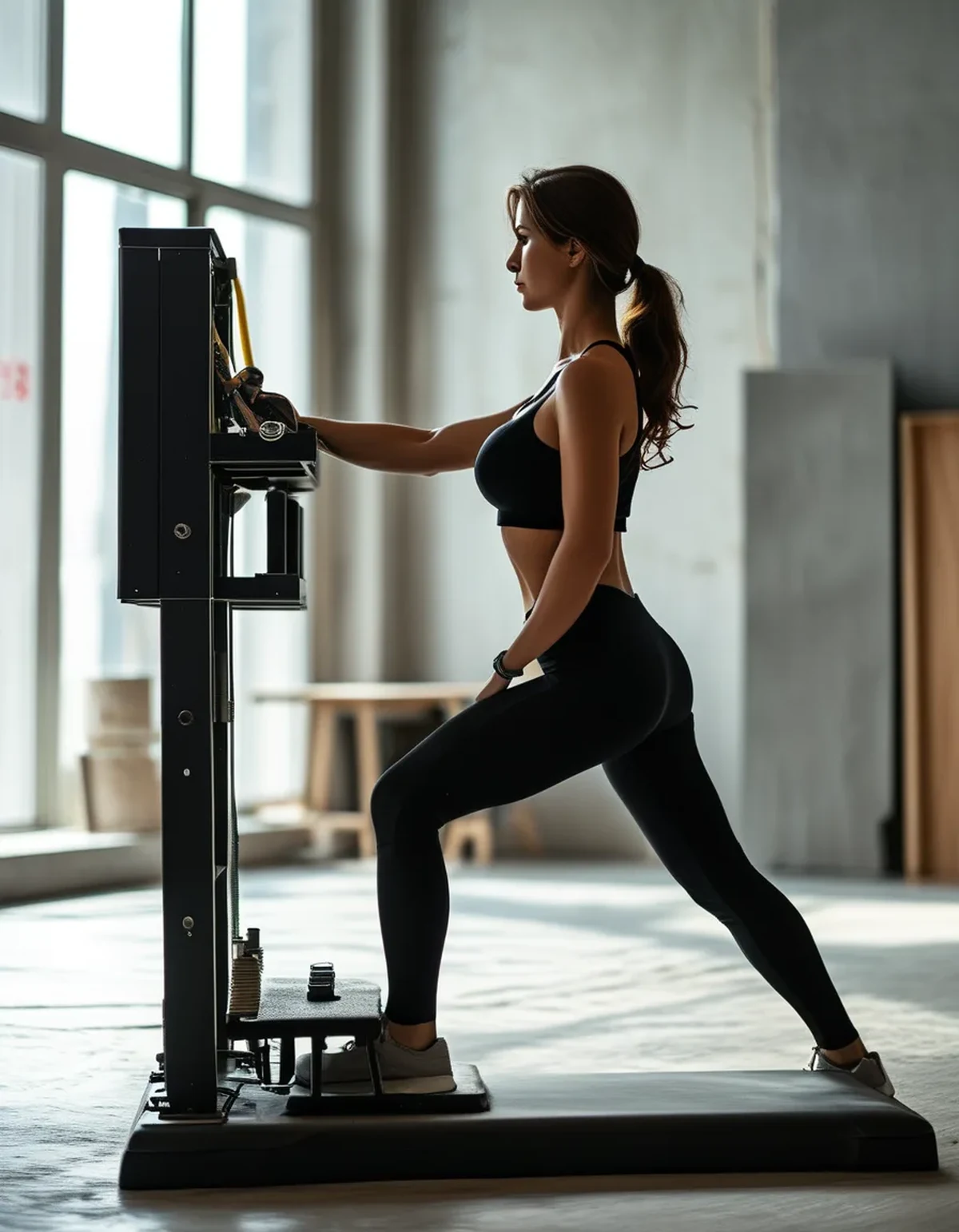
Seen here: High Waist Yoga Leggings with Side Pockets — shop it on bubblelime.com
Keep Reading
This article is for general informational and styling purposes only. Fit, sizing, and product availability may vary.