The Spring Tension Mistakes That Make Lagree Harder Than It Should Be
Quick Answer: The most common Lagree spring tension mistakes are using too much resistance too early (which encourages momentum instead of slow control), using the same tension for every exercise regardless of muscle group, and not adjusting tension as fatigue builds through class — matching tension to control, not to how much you can move fast, fixes most of it.
More resistance feels like more of a workout, but on a Lagree machine it often works against the exact slow, controlled movement the method depends on.
Why does too much spring tension actually make Lagree less effective?
Lagree’s core principle is slow, controlled movement with continuous tension on the target muscle, and excessive spring resistance makes that slow control much harder to maintain, tempting momentum and rebound instead. Paradoxically, a slightly lighter spring setting that allows full control often produces more muscle burn and better form than a heavier setting that turns into a fast, momentum-driven struggle.
Should spring tension really be different for every exercise?
Yes — a setting appropriate for a lower-body exercise like a lunge or squat is often too much or too little for a core or upper-body movement, since different muscle groups and movement patterns need different resistance to maintain slow control throughout the full range. Beginners who keep one tension setting for an entire class often end up either straining on some exercises or barely working on others.
How should spring tension change as fatigue builds during a class?
As muscles fatigue toward the end of a class, maintaining the same spring tension from the beginning can push form past the point of control, especially on exercises repeated later in a sequence. Reducing tension slightly for the final few exercises, rather than forcing the same resistance through fatigue, keeps movement quality high and reduces injury risk from compromised form.

What’s the actual sign that your spring tension is set correctly?
The right tension lets you complete the full slow tempo of a movement — often a 4-8 count per phase — without any jerking, bouncing, or rushing through the hardest part of the range. If you’re speeding up through a sticking point or using momentum to get past it, tension is likely too high for that specific exercise.
Does spring tension mastery matter more for beginners or experienced Lagree practitioners?
It actually matters most for beginners, since experienced practitioners have usually already internalized the feel of correct resistance through trial and error, while beginners often default to ‘more is better’ without realizing it undermines the method’s core mechanism. Asking an instructor to check your settings during your first several classes accelerates past this common beginner mistake.
Myth vs Fact: Lagree Spring Tension
Myth — higher spring tension always means a harder, more effective workout. Fact — tension that breaks your slow, controlled tempo often produces a less effective workout than a lighter setting done with perfect control. Myth — spring tension should stay the same throughout a single class. Fact — adjusting tension per exercise, and reducing it as fatigue builds, is standard practice among experienced practitioners.
FAQ: Lagree Spring Tension Questions, Answered
How much spring tension should a true beginner start with?
Most studios recommend starting on the lighter end and prioritizing control and full range of motion over resistance level for the first several classes.
Is it okay to ask an instructor to adjust your springs mid-class?
Yes, this is completely normal and instructors expect it, especially for beginners still learning what correct tension feels like for each exercise.
Does spring tension preference change as you get stronger?
Yes — as control and strength improve, many practitioners gradually increase tension while still prioritizing the same slow, controlled tempo that defines the method.
TL;DR:
- Too much spring tension encourages momentum instead of the slow control Lagree depends on
- Tension should vary by exercise and muscle group, not stay fixed all class
- Reducing tension slightly as fatigue builds protects form quality late in class
- The correct setting lets you complete the full slow tempo without jerking or rushing
More resistance isn’t the goal on a Lagree machine — control through the full range of motion is, and that often means using less tension than instinct suggests.
See It in Motion
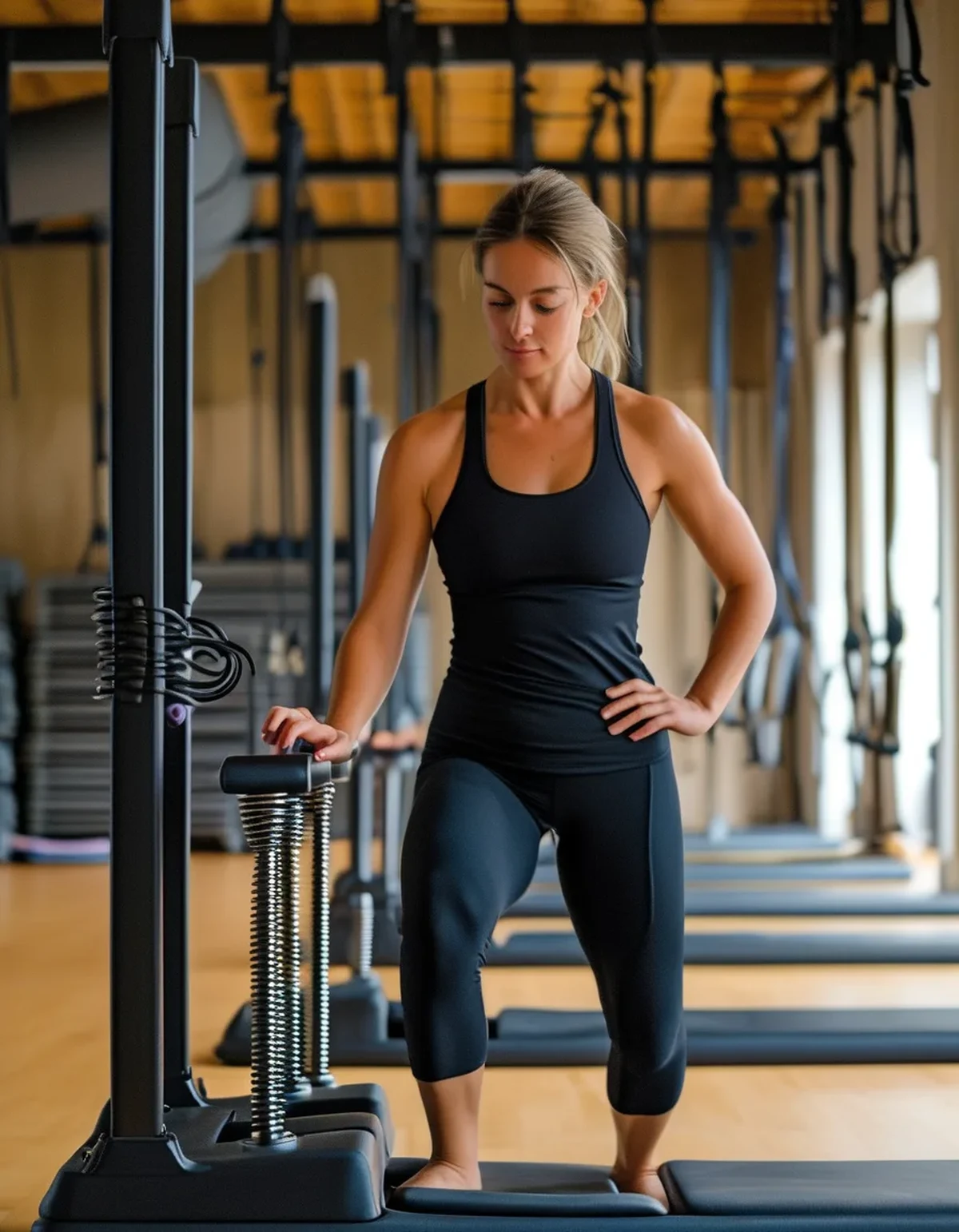
Seen here: High Waist Bootcut Yoga Pants — shop it on bubblelime.com
Keep Reading
This article is for general informational and styling purposes only. Fit, sizing, and product availability may vary.