Why Lagree Soreness Hits Differently Than Other Workout Soreness
Quick Answer: Lagree’s signature soreness is driven by its heavy reliance on slow, sustained eccentric muscle contractions (controlled lengthening under tension), which is specifically the type of muscle action known to produce the most pronounced delayed-onset muscle soreness (DOMS) — meaning the shake you feel in class and the soreness you feel two days later come from related but distinct mechanisms.
The in-class shake and the next-day soreness aren’t really the same phenomenon, even though people often assume the worse the shake, the worse the soreness will be — that’s not a reliable predictor.
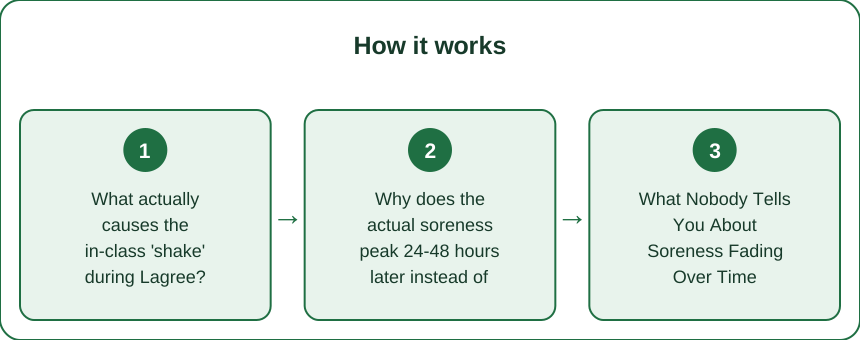
What actually causes the in-class ‘shake’ during Lagree?
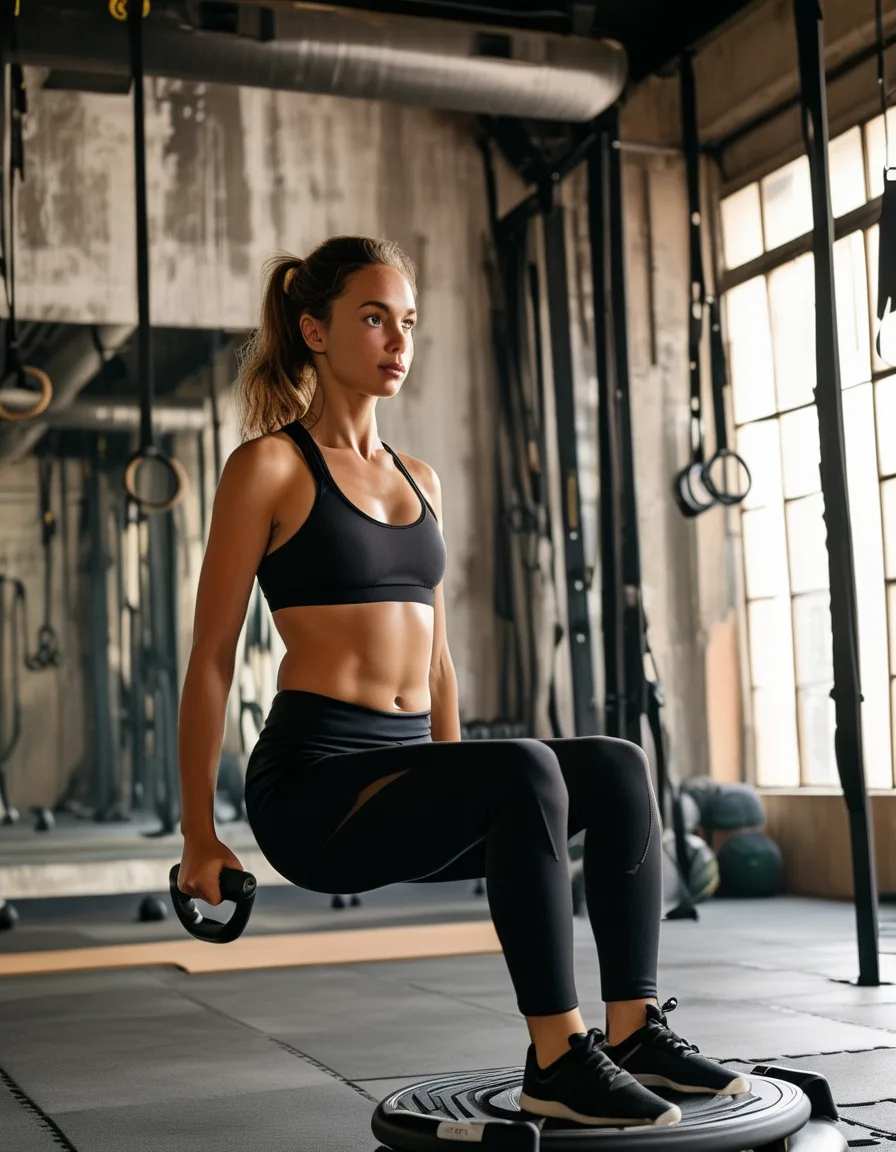
The shake is largely a neuromuscular fatigue response — as muscle fibers tire during a sustained slow contraction, motor unit firing becomes less synchronized, producing the visible trembling, especially during the longer holds Lagree is known for.
This is primarily an in-the-moment fatigue signal, not itself a direct measure of how sore you’ll be later — some of the shakiest exercises don’t necessarily correlate with the worst next-day soreness.
Why does the actual soreness peak 24-48 hours later instead of immediately?
Delayed-onset muscle soreness (DOMS) results from microscopic muscle fiber damage during unfamiliar or intense eccentric loading, and the inflammatory and repair response that produces the sore sensation takes time to develop — commonly peaking at 24-48 hours post-workout, well after the workout itself.
Lagree’s emphasis on slow eccentric movement (lengthening a muscle under tension, like slowly lowering during a lunge) specifically maximizes this type of muscle damage compared to faster, more ballistic movement patterns.
What Nobody Tells You About Soreness Fading Over Time
Here’s the part beginners don’t expect: soreness intensity from the same workout genuinely decreases significantly after the first few sessions, due to a phenomenon called the ‘repeated bout effect’ — the body adapts and becomes protected against similar future damage from the same movement pattern.
This means the brutal soreness many people experience their first month of Lagree is not representative of what ongoing practice will feel like — it’s specifically a new-stimulus response, not the workout’s permanent effect.
What actually helps manage Lagree-related soreness?
- Expecting and planning around the first-month soreness curve rather than assuming something’s wrong or overtraining
- Light movement and walking on sore days, which supports recovery more than complete rest
- Adequate protein intake to support the muscle repair process driving the soreness
- Gradual frequency increase rather than starting with several classes per week immediately, letting the repeated bout effect build in progressively
FAQ: Lagree Soreness Questions, Answered
Is severe soreness after the first Lagree class a bad sign?
No — it’s an expected and normal response to a new type of eccentric-heavy loading, not an indication of injury or doing something wrong.
Does Lagree soreness eventually stop happening with regular practice?
It significantly decreases due to the repeated bout effect, though introducing new class variations or increased resistance can still produce noticeable (if less severe) soreness.
Should you skip a Lagree class if still sore from the last one?
Mild residual soreness generally doesn’t require skipping, though very significant soreness or reduced range of motion is a reasonable signal to allow an extra recovery day.
TL;DR:
- The in-class shake is neuromuscular fatigue, distinct from the soreness that follows
- Delayed soreness comes from eccentric-heavy muscle damage that peaks 24-48 hours later
- Soreness drops substantially after the first few sessions due to the repeated bout effect
- Light movement and adequate protein support recovery better than complete rest
The brutal first-month soreness is a new-stimulus response, not a permanent feature of Lagree — it’s genuinely not this hard on your body forever.
See It in Motion
Seen here: Racerback Tank Top - White — shop similar styles on bubblelime.com
Keep Reading
This article is for general informational and styling purposes only. Fit, sizing, and product availability may vary.