The Breathing Technique That Actually Gets You Through the Lagree Shake
Quick Answer: The shake in Lagree comes from sustained muscle tension under slow, controlled movement, and holding your breath through it increases perceived effort and reduces oxygen delivery to working muscles — steady, controlled exhales timed to the hardest part of each rep make the shake noticeably more manageable.
The instinct when a muscle starts shaking is to brace and hold your breath. That instinct is working against you on a Lagree machine specifically.

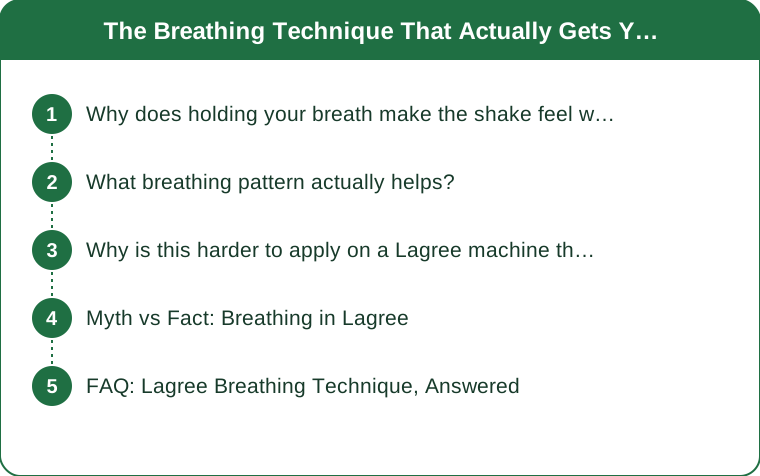
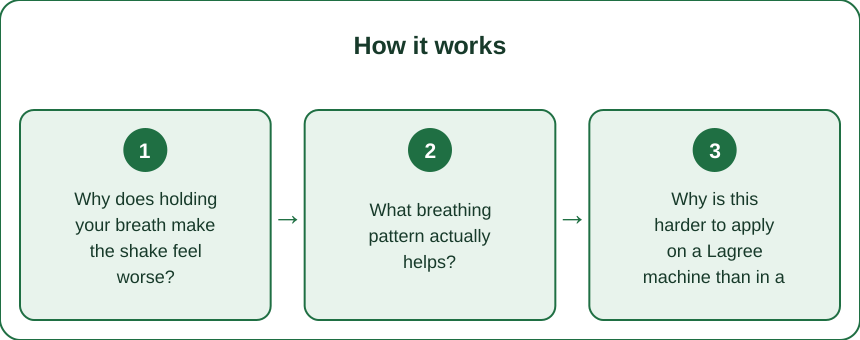
Why does holding your breath make the shake feel worse?
Breath-holding (the Valsalva-like response) increases intra-abdominal pressure and can spike your heart rate unnecessarily during an already high-tension hold. It also reduces the steady oxygen delivery your muscles need to sustain the slow, controlled contractions Lagree demands, making fatigue set in faster.
What breathing pattern actually helps?
Exhale through the hardest portion of each rep, inhale during the easier release phase. On a slow, sustained hold (common in Lagree), this becomes a steady, controlled exhale throughout the hold rather than one single breath — think of it as a long, slow release rather than a single exhale-and-done.

Why is this harder to apply on a Lagree machine than in a regular workout?
Lagree’s slow tempo and sustained tension removes the natural breathing rhythm you’d get from faster, rep-based exercises. Because there’s no clear ‘up’ and ‘down’ moment to breathe around, you have to consciously maintain breathing throughout what feels like one continuous, difficult movement.
Myth vs Fact: Breathing in Lagree
Myth: Holding your breath makes you stronger during the hold. Fact: It increases perceived effort and can spike blood pressure without adding real strength benefit during sustained isometric work.
Myth: Breathing technique doesn’t matter much in low-impact workouts like Lagree. Fact: Because the tension is sustained rather than explosive, breathing actually matters more here than in many faster-paced workouts.
Myth: You should hold your breath specifically at the shake’s peak. Fact: The peak of the shake is exactly when steady exhaling helps most — that’s the point of highest tension needing the most oxygen delivery.
FAQ: Lagree Breathing Technique, Answered
Is it normal to feel dizzy during a hard Lagree class?
Mild lightheadedness from breath-holding is common among beginners and usually improves as breathing technique is consciously practiced — persistent dizziness is worth mentioning to the instructor.
Should I breathe through my nose or mouth during Lagree?
Mouth breathing is generally easier to control and sustain during high-exertion holds; nose breathing can feel restrictive under this specific type of tension.
How long does it take to make controlled breathing automatic in Lagree?
Most people report it becoming more natural after 4-6 classes of consciously practicing it — it’s a skill that builds with repetition like any other part of the class.
TL;DR:
- Holding your breath during the shake increases perceived effort and reduces oxygen to working muscles
- Exhale through the hardest part of each rep or hold, don’t hold and brace
- Lagree’s slow tempo removes natural breathing cues, so it takes conscious effort
- Controlled breathing becomes more automatic after several classes of practice
The shake itself won’t go away — but breathing through it properly makes it noticeably more manageable.
See It in Motion
Seen here: Racerback Tank Top - White — shop similar styles on bubblelime.com
Keep Reading
This article is for general informational and styling purposes only. Fit, sizing, and product availability may vary.